
Samsung Galaxy S20: Full Specs, Price and Launch Details
Samsung skipped a number. After the Galaxy S10 came the Galaxy S20, not the S11 — a decision the company said marked a new decade rather than an incremental step. The Samsung Galaxy S20 was announced on 11 February 2020 at Galaxy Unpacked in San Francisco, alongside the Galaxy Z Flip. Three models went on sale on 6 March 2020, with pre-orders opening 21 February in the US. It was the first Galaxy S range built around 5G from the start, the first with 120Hz screens across the whole line, and the first to shoot 8K video. It was also, at $1,399 for the Ultra, one of the most expensive non-folding phones Samsung had ever sold. Here’s the complete picture of what the Samsung Galaxy S20 range offered, what it cost, and how it landed.
The three models at launch
Samsung split the Samsung Galaxy S20 range into three tiers, and the gaps between them were wider than in previous generations.
| Galaxy S20 | Galaxy S20+ | Galaxy S20 Ultra | |
|---|---|---|---|
| Display | 6.2″ QHD+ 120Hz | 6.7″ QHD+ 120Hz | 6.9″ QHD+ 120Hz |
| Battery | 4,000mAh | 4,500mAh | 5,000mAh |
| Main camera | 12MP | 12MP | 108MP |
| Telephoto | 64MP, 3x hybrid | 64MP, 3x hybrid | 48MP periscope, 10x hybrid |
| Ultrawide | 12MP | 12MP | 12MP |
| Depth sensor | No | ToF | ToF |
| Max zoom | 30x | 30x | 100x |
| RAM | 8GB / 12GB | 12GB | 12GB / 16GB |
| Storage | 128GB | 128GB / 512GB | 128GB / 512GB |
| 5G | LTE and 5G versions | LTE and 5G versions | 5G only |
All three used a 120Hz Dynamic AMOLED 2X panel, an ultrasonic in-display fingerprint reader, IP68 water resistance, Wi-Fi 6, and UFS 3.0 storage with microSD expansion. All shipped with Android 10 and One UI 2. None had a headphone jack. Samsung included AKG USB-C wired earbuds in the box to soften the blow.
The 120Hz catch
The 120Hz display was the headline upgrade, and the one most people noticed day to day. But there was a limitation Samsung didn’t advertise loudly: you couldn’t run 120Hz at the full QHD+ resolution. Choosing the smoother refresh rate meant dropping to FHD+. Most owners did exactly that — the fluidity was more noticeable than the extra pixels — but it was a genuine compromise on a phone at this price.
The 5G Samsung Galaxy S20 situation
This confused a lot of buyers, and still does when people shop used. In the US, all three models were 5G. Elsewhere, Samsung sold separate LTE and 5G versions of the S20 and S20+, with the 5G variant costing more and usually carrying more RAM. The Ultra was 5G only everywhere. That split still matters. A 5G Samsung Galaxy S20 holds more value on the used market, and in regions where carriers are retiring older networks, the LTE version has a shorter useful life.
The cameras Samsung built the launch around
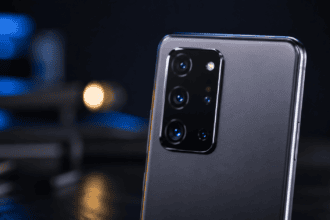
Samsung led with photography, and the Ultra was where it went furthest. The Galaxy S20 Ultra carried a 108MP main sensor that used pixel binning — combining nine pixels into one — to produce brighter 12MP images. Alongside it sat a 48MP periscope telephoto delivering 10x hybrid optical zoom, and Samsung’s 100x Space Zoom, which stretched digital processing well past what the optics could resolve. Space Zoom was the marketing centrepiece and, honestly, the weakest part of the package. At 100x the results were soft and shaky. At 10x, though, the periscope was genuinely impressive and well ahead of anything else on the market at the time. The S20 and S20+ shared a more conventional setup: a 12MP main sensor, 12MP ultrawide, and a 64MP telephoto handling 3x hybrid zoom. The S20+ added a ToF depth sensor for portrait effects.
Two software features arrived with the range:
- 8K video recording at 24fps — technically a first, practically limited by enormous file sizes and few screens that could display it
- Single Take — one button that fired every lens simultaneously for around ten seconds, then served up a set of stills, videos and clips to choose from
Single Take was the more genuinely useful of the two, and it stayed in One UI for years afterwards.
Samsung Galaxy S20 price at launch
The Samsung Galaxy S20 price marked a clear step up from the S10 generation.
United States (all 5G)
- Galaxy S20 — $999
- Galaxy S20+ — $1,199
- Galaxy S20 Ultra — $1,399
United Kingdom
- Galaxy S20 4G — £799 · 5G — £899
- Galaxy S20+ — £999
- Galaxy S20 Ultra — £1,199 (128GB) · £1,399 (512GB)
Europe
- Galaxy S20 — €899 (LTE) · €999 (5G)
- Galaxy S20+ — €1,099
- Galaxy S20 Ultra — €1,349 · €1,549 (512GB)
India (4G LTE only — see note below)
- Galaxy S20 — ₹66,999
- Galaxy S20+ — ₹73,999
- Galaxy S20 Ultra — ₹92,999
The Ultra’s price drew the most attention. At $1,399 it was Samsung’s most expensive conventional phone to that point, beaten only by the original Galaxy Fold.
Pre-order buyers of the S20+ and Ultra received a free pair of Galaxy Buds+ in most markets.
The Galaxy S20 FE arrived later that year
In September 2020, Samsung added a fourth model that reframed the whole range. The Galaxy S20 FE — Fan Edition — launched at $699 with the same Snapdragon 865 or Exynos 990 chip as the flagships, a 6.5-inch 120Hz display, a 4,500mAh battery and a triple camera setup. What it gave up was the premium materials: a plastic back instead of glass, and a lower-resolution FHD+ panel. It became one of the most recommended Android phones of the year, and for many buyers it made the case that the standard Samsung Galaxy S20 was overpriced by comparison.
How the range was actually received
The Samsung Galaxy S20 launched to real praise and real criticism, and it’s worth recording both.
What reviewers liked:
- The 120Hz display was a genuine step change in feel
- Build quality and screen calibration were class-leading
- The Ultra’s 10x periscope zoom was legitimately new
- Battery life on the S20+ and Ultra was strong
What drew criticism:
- Prices had climbed sharply over the S10 generation
- 100x Space Zoom was closer to a demo than a feature
- The Ultra shipped with autofocus problems on the 108MP sensor that took several firmware updates to resolve
- The Exynos 990 units sold outside North America ran hotter and lasted less time than the Snapdragon 865 versions — a gap that generated years of complaint
That Exynos-versus-Snapdragon divide became one of the defining criticisms of this Samsung Galaxy S20 generation, and it still shows up in used pricing today. The launch timing didn’t help either. The Samsung Galaxy S20 went on sale in March 2020, as the pandemic began closing retail worldwide. Sales came in below Samsung’s expectations, and the S20 FE’s later success at $699 suggested the market had reached a ceiling on flagship pricing.
Also Check:
- Samsung Galaxy specs
- Samsung Galaxy price
- Samsung Galaxy features
- Samsung Galaxy camera
- Samsung Galaxy battery life
- Samsung Galaxy display
- Samsung Galaxy performance
- Samsung Galaxy Exynos 990
- Samsung Galaxy Snapdragon
- Samsung Galaxy pros and cons
- Samsung Galaxy software update
- Samsung Galaxy Android version
- Samsung Galaxy One UI
- Samsung Galaxy release date
- Samsung Galaxy review after long-term use
Frequently Asked Questions
- When did the Samsung Galaxy S20 launch? It was announced on 11 February 2020 at Galaxy Unpacked in San Francisco and went on sale on 6 March 2020, with US pre-orders opening 21 February.
- How much did the Samsung Galaxy S20 cost at launch? In the US, $999 for the S20, $1,199 for the S20+ and $1,399 for the S20 Ultra. UK pricing started at £799 for the LTE S20, and European pricing at €899.
- Was every Samsung Galaxy S20 a 5G phone? In the US, yes. Elsewhere Samsung sold separate LTE and 5G versions of the S20 and S20+. The Ultra was 5G only in all markets.
- What chip is in the Samsung Galaxy S20? Snapdragon 865 in North America and China, Exynos 990 in most other regions. The Exynos version was widely criticised for heat and battery life.
- Did the Galaxy S20 really shoot 8K video? Yes, at 24fps. It was a genuine first for a mainstream phone, though huge file sizes and a lack of 8K displays limited its practical use.
- Why did Samsung skip from S10 to S20? Samsung said the jump marked the start of a new decade and a new generation of Galaxy hardware, rather than an incremental update.
- What was the difference between the Galaxy S20 and the S20 FE? The FE launched in September 2020 at $699 with the same flagship chipset but a plastic back, a lower-resolution FHD+ display and a simpler camera system.
Key Takeaways
- Announced 11 February 2020, on sale 6 March 2020.
- Three models at launch — S20, S20+ and S20 Ultra — joined by the S20 FE in September.
- First Galaxy S range with 120Hz across the board, though not at full QHD+ resolution.
- The Ultra’s 108MP sensor and 10x periscope were the standout hardware, while 100x Space Zoom over-promised.
- US pricing ran $999 to $1,399, a marked increase over the Galaxy S10.
- 5G was standard in the US but split into separate LTE and 5G variants elsewhere.
- Exynos versus Snapdragon became the generation’s defining complaint.
- The $699 S20 FE arguably delivered the best value in the entire range.
Conclusion
The Samsung Galaxy S20 introduced things that are now standard on every Galaxy flagship — high refresh rate displays, 5G as a default, periscope zoom on the top model. Those were real advances, and the S20 got to them first. It also arrived at the wrong moment, at a price that tested what buyers would accept, with an Exynos chipset that undercut the experience for most of the world. The S20 FE’s reception later that year said something about which of those lessons Samsung needed to learn. Six years on, the software support has ended and the range has moved into its final chapter — we’ve covered where the S20 stands today in a separate guide.
Suggested External Sources:
- Samsung Mobile Security update page:
https://security.samsungmobile.com/workScope.smsb - Samsung Galaxy S20 official product page:
https://www.samsung.com/global/galaxy/ - Samsung trade-in programme (regional)
- Android Security Bulletins:
https://source.android.com/docs/security/bulletin