
Samsung Galaxy S20 Specs, Price and Features
Samsung jumped from the S10 straight to the S20 in 2020, skipping nine numbers to mark what it called a new decade of Galaxy phones. The naming was marketing. The hardware was not. The Samsung Galaxy S20 specs brought 120Hz displays to the entire flagship line for the first time, made 5G standard in most markets, and put a 108-megapixel sensor in the Ultra. It also pushed prices to a level that made a lot of buyers hesitate. This is the complete specification breakdown for all three models — what’s inside them, what they cost, where they differed, and what they’re worth now that Samsung has stopped supporting them.
- Samsung Galaxy S20 Specs, Price and Features
- Samsung Galaxy S20 overview
- Launch date
- Price at launch
- Design and build
- Display
- Cameras
- Performance and hardware
- Battery and charging
- Software and One UI
- Connectivity
- Colours and storage
- Pros and cons
- Is the Samsung Galaxy S20 still worth buying?
- Common Galaxy S20 problems and fixes
- Frequently Asked Questions
- Key Takeaways
- Conclusion
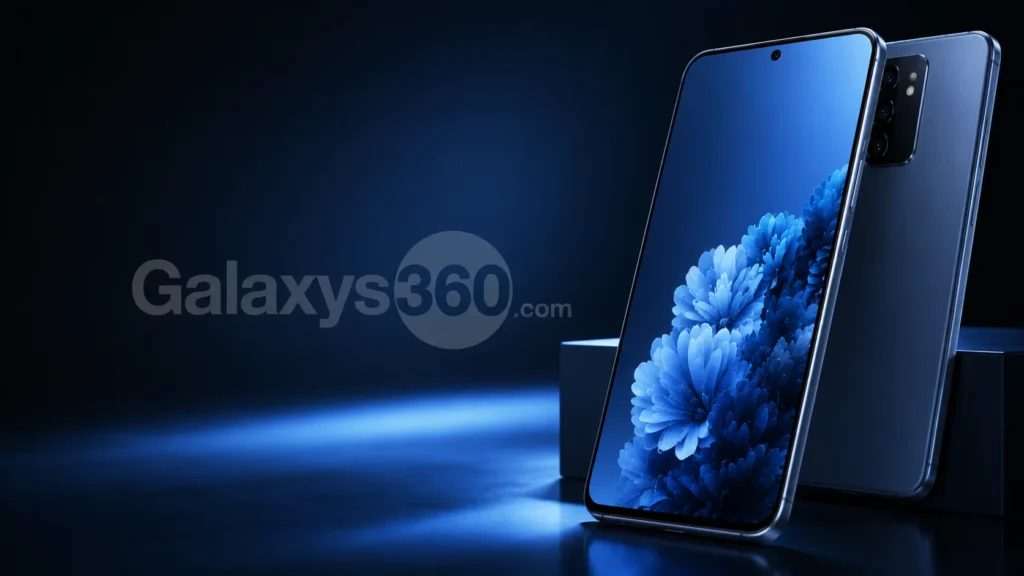
Samsung Galaxy S20 overview
Three models launched together: the standard S20, the larger S20+, and the Ultra. A fourth, the S20 FE, arrived in September 2020 at a much lower price. The differences between them were wider than in previous Galaxy generations. The Ultra wasn’t just a bigger S20 — it ran a completely different camera system.
| Galaxy S20 | Galaxy S20+ | Galaxy S20 Ultra | |
|---|---|---|---|
| Display | 6.2″ QHD+ 120Hz | 6.7″ QHD+ 120Hz | 6.9″ QHD+ 120Hz |
| Main camera | 12MP | 12MP | 108MP |
| Telephoto | 64MP, 3x hybrid | 64MP, 3x hybrid | 48MP periscope, 10x hybrid |
| Ultrawide | 12MP | 12MP | 12MP |
| Depth sensor | — | ToF | ToF |
| Max zoom | 30x | 30x | 100x |
| Battery | 4,000mAh | 4,500mAh | 5,000mAh |
| RAM | 8GB / 12GB | 12GB | 12GB / 16GB |
| Storage | 128GB | 128GB / 512GB | 128GB / 512GB |
| 5G | LTE and 5G versions | LTE and 5G versions | 5G only |
Launch date
Samsung announced the Samsung Galaxy S20 specs range on 11 February 2020 at Galaxy Unpacked in San Francisco, sharing the stage with the Galaxy Z Flip. Pre-orders opened 21 February in the United States and 15 February in India. All three models went on sale on 6 March 2020 across most markets. The Galaxy S20 FE followed on 23 September 2020.
Price at launch
India (4G only — see the connectivity section)
- Galaxy S20 — ₹66,999
- Galaxy S20+ — ₹73,999
- Galaxy S20 Ultra — ₹92,999
United States (all 5G)
- Galaxy S20 — $999
- Galaxy S20+ — $1,199
- Galaxy S20 Ultra — $1,399
United Kingdom
- Galaxy S20 — £799 (4G) · £899 (5G)
- Galaxy S20+ — £999
- Galaxy S20 Ultra — £1,199 (128GB) · £1,399 (512GB)
Europe
- Galaxy S20 — €899 (LTE) · €999 (5G)
- Galaxy S20+ — €1,099
- Galaxy S20 Ultra — €1,349 · €1,549 (512GB)
Prices didn’t hold. By January 2021, ahead of the S21 launch, Samsung had cut Indian pricing to ₹49,999 for the S20, ₹56,999 for the S20+ and ₹76,999 for the Ultra — a ₹17,000 drop on the base model inside a year.
Design and build
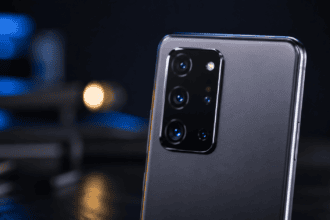
All three phones used an aluminium frame with Gorilla Glass 6 front and back, and carried an IP68 rating for dust and water resistance. Samsung squared off the rear camera housing into a raised rectangle — a design language that stuck around for years afterwards. The Ultra’s module was noticeably thicker, protruding enough that the phone rocked on a flat table. The curved display edges of the S10 were reduced to a much gentler curve, which most reviewers considered an improvement for accidental touches. There is no headphone jack. Samsung included AKG USB-C wired earbuds in the box.
Display
Every Specs of Samsung Galaxy S20 model used a Dynamic AMOLED 2X panel at QHD+ resolution with HDR10+ support and a 120Hz refresh rate. Sizes ran 6.2 inches on the S20, 6.7 on the S20+, and 6.9 on the Ultra. All used a centred hole-punch front camera. The catch worth knowing: you could not run 120Hz at full QHD+ resolution. Selecting the higher refresh rate forced the display down to FHD+. Most owners chose smoothness over pixels, but it was a genuine compromise at these prices. Under the screen sat an ultrasonic in-display fingerprint reader — faster and more reliable than the optical sensors most rivals used, though still slower than a physical reader.
Cameras
This is where the Samsung Galaxy S20 specs split most sharply.
S20 and S20+
Both used the same three-camera setup:
- 12MP main sensor, f/1.8, OIS
- 64MP telephoto with 3x hybrid optical zoom and OIS
- 12MP ultrawide with a 120-degree field of view
The S20+ added a ToF depth sensor for portrait effects and depth mapping.
Digital zoom reached 30x on both, though quality fell away well before that.
S20 Ultra
The Ultra ran a different system entirely:
- 108MP main sensor using nine-to-one pixel binning to output brighter 12MP images
- 48MP periscope telephoto with 10x hybrid optical zoom
- 12MP ultrawide
- ToF depth sensor
- 100x Space Zoom
Space Zoom was the marketing headline and the weakest part of the package — at 100x, results were soft and nearly impossible to hold steady. At 10x, though, the periscope was genuinely ahead of anything else available in 2020.
Video and software features
Both 8K recording at 24fps and Single Take debuted on the Samsung Galaxy S20 specs. Single Take fired every lens at once for around ten seconds and returned a set of stills and clips to choose from. It proved the more useful of the two and stayed in One UI for years. The Ultra shipped with autofocus problems on the 108MP sensor that took several firmware updates to resolve — a well-documented issue that affected early buyers.
Performance and hardware
Chipset depended entirely on where you bought the phone:
- Snapdragon 865 — United States and China
- Exynos 990 — Europe, India, and most other markets
Both were 7nm parts, but they did not perform equally. The Exynos 990 ran hotter and delivered noticeably worse battery life, and the gap became one of the defining complaints of this generation. It still affects resale values today. RAM ranged from 8GB on the base Samsung Galaxy S20 Specs up to 16GB on the top Ultra. Storage started at 128GB using the fast UFS 3.0 standard, with microSD expansion up to 1TB — a feature Samsung removed from later Galaxy S generations.
Battery and charging
- Galaxy S20 — 4,000mAh
- Galaxy S20+ — 4,500mAh
- Galaxy S20 Ultra — 5,000mAh
All three supported 25W wired charging, with the Ultra additionally capable of 45W using a separately purchased charger. Wireless charging ran at 15W, and Wireless PowerShare let the phones charge earbuds or a watch off the back. Battery life at launch was solid on the S20+ and Ultra, tighter on the smaller S20 — particularly with 120Hz enabled and an Exynos chip. Six years on, degradation is the most common complaint from remaining owners.
Software and One UI
The Samsung Galaxy S20 Specs shipped with Android 10 and One UI 2. Samsung promised three major OS upgrades and four years of security patches. It delivered exactly that: the range reached Android 13 with One UI 5.1 and never received Android 14. Support has since ended. Samsung removed the S20, S20+ and S20 Ultra from its update schedule in April 2025, making the March 2025 security patch their last. The S20 FE continued on quarterly patches into late 2025. Google Play system updates still arrive, which patches parts of Android independently — but that is not a substitute for full security updates.
Connectivity
This is the detail that catches out used buyers. In the United States, every Specs of Samsung Galaxy S20 Specs was 5G. Elsewhere, Samsung sold separate LTE and 5G versions of the S20 and S20+. The Ultra was 5G only in all markets. In India, the S20 and S20+ launched as 4G only — Samsung left out the 5G modem entirely, which is the main reason Indian pricing came in below US pricing. India had no commercial 5G in 2020, so it was a reasonable call at the time, but an Indian-market S20 or S20+ will never connect to 5G. Beyond cellular, all models carried Wi-Fi 6, Bluetooth 5.0, NFC and USB-C 3.2.
Colours and storage
- Galaxy S20 — Cosmic Gray, Cloud Blue, Cloud Pink
- Galaxy S20+ — Cosmic Gray, Cosmic Black, Cloud Blue
- Galaxy S20 Ultra — Cosmic Gray, Cosmic Black
Indian units launched in Cloud Blue, Cosmic Gray and Cosmic Black. Storage started at 128GB across the range, with 512GB available on the S20+ and Ultra. All models accepted microSD cards up to 1TB.
Pros and cons
What worked
- 120Hz display was a genuine step change in feel
- Excellent screen calibration and build quality
- The Ultra’s 10x periscope zoom was legitimately new
- Expandable storage — since dropped from Galaxy S phones
- IP68 and wireless charging across the whole range
What didn’t
- Prices rose sharply over the Galaxy S10
- Exynos 990 ran hot with poor battery life
- 100x Space Zoom over-promised
- Ultra shipped with autofocus problems
- No 120Hz at full resolution
- No headphone jack
Is the Samsung Galaxy S20 still worth buying?
Generally, no. The hardware still holds up for everyday use — the display in particular remains good. But software support ended in 2025, which means any Android vulnerability found since then stays unpatched permanently. For similar money on the used market, a recent Galaxy A-series phone will have years of security updates ahead of it. That’s the better purchase for almost everyone. If you already own one, it remains perfectly usable as a secondary device, a media player or a camera. As your main phone holding banking apps, it’s harder to justify.
Common Galaxy S20 problems and fixes
Rapid battery drain — six-year-old cells hold far less charge. Reduce the refresh rate to 60Hz, lower screen brightness, and restrict background activity for unused apps. A battery replacement typically costs far less than a new phone.
Overheating — most common on Exynos units under camera or gaming load. Close background apps, avoid charging while gaming, and remove thick cases during heavy use.
Slow performance — clear the cache partition via recovery mode, uninstall unused apps, and keep at least 15% of storage free.
Camera focus issues — largely fixed by firmware on the Ultra. If problems persist, clear the Camera app cache in Settings.
Apps refusing to install or update — increasingly common as developers drop Android 13 support. There is no fix for this one; it is a signal the device is nearing the end of its useful life.
Frequently Asked Questions
- What are the Samsung Galaxy S20 specifications? A 6.2-inch 120Hz QHD+ display, 4,000mAh battery, 12MP main camera with 64MP telephoto and 12MP ultrawide, 8GB or 12GB RAM, 128GB storage with microSD expansion, and either a Snapdragon 865 or Exynos 990 chipset depending on region.
- Does the Samsung Galaxy S20 have 5G? It depends on where it was sold. US models were all 5G. Other regions had separate LTE and 5G versions, and Indian units were 4G only.
- What is the last Android version for the Galaxy S20? Android 13 with One UI 5.1. Samsung delivered three OS upgrades as promised and ended support in April 2025.
- How much did the Samsung Galaxy S20 cost? ₹66,999 in India, $999 in the US, £799 in the UK and €899 in Europe for the base model. The Ultra started at ₹92,999, $1,399, £1,199 and €1,349.
- What chipset does the Galaxy S20 use? Snapdragon 865 in the US and China, Exynos 990 elsewhere including India and Europe. The Exynos version was widely criticised for heat and battery life.
- Does the Galaxy S20 have a headphone jack? No. Samsung included AKG USB-C wired earbuds instead.
- Can the Galaxy S20 record 8K video? Yes, at 24fps. It was a first for a mainstream phone, though file sizes were large and few displays could show the footage.
- Is the Samsung Galaxy S20 still safe to use? It works, but risk increases over time without security patches. It’s reasonable as a secondary device, less so as your main phone for banking.
Key Takeaways
- Announced 11 February 2020, on sale 6 March 2020.
- Three models plus the S20 FE, which arrived in September at a much lower price.
- 120Hz across the range — but not at full QHD+ resolution.
- The Ultra’s 108MP sensor and 10x periscope were the standout hardware.
- Indian pricing started at ₹66,999, and the S20 and S20+ were 4G only there.
- Snapdragon 865 in the US, Exynos 990 elsewhere — the defining complaint of the generation.
- Android 13 is the ceiling, and support ended in April 2025.
- Not worth buying used today — a recent A-series phone is the better choice.
Suggested External Sources
- Samsung Galaxy S20 official specifications:
https://www.samsung.com/global/galaxy/ - Samsung Newsroom Unpacked 2020 announcement:
https://news.samsung.com/global/ - Samsung Mobile Security update list:
https://security.samsungmobile.com/workScope.smsb - Qualcomm Snapdragon 865 platform page:
https://www.qualcomm.com/
Conclusion
The Samsung Galaxy S20 Specs introduced features now standard on every Galaxy flagship: high refresh rate displays, 5G by default, periscope zoom at the top of the range. Those were real advances, and this was the generation that delivered them first. It also arrived at an awkward moment — March 2020, as retail closed worldwide — at prices that tested what buyers would accept, with an Exynos chipset that undercut the experience for most of the world outside the US. The specifications still read well six years later. It’s the software support, not the hardware, that has finally caught up with it.