
Samsung Galaxy S20 Camera: Specs, Features and What It Actually Delivered
Samsung spent most of its February 2020 launch event talking about photography. Not the screen, not the chip — the cameras. The Galaxy S20 Ultra arrived with a 108-megapixel sensor and a zoom claim of 100x, and those two numbers did most of the marketing. Some of it held up. Some of it didn’t. Six years on, it’s easier to be honest about which was which. This is a full breakdown of the Samsung Galaxy S20 camera across all three models — what the hardware actually was, which features proved useful, and how the whole thing looks now that the novelty has worn off.
- Samsung Galaxy S20 Camera: Specs, Features and What It Actually Delivered
- What each model actually had
- The 108MP sensor, explained simply
- Zoom: where the marketing outran the hardware
- Video: 8K arrived early
- Single Take, the sleeper feature
- The autofocus problem
- How the Samsung Galaxy S20 camera holds up now
- Frequently Asked Questions
- Key Takeaways
- Conclusion
What each model actually had
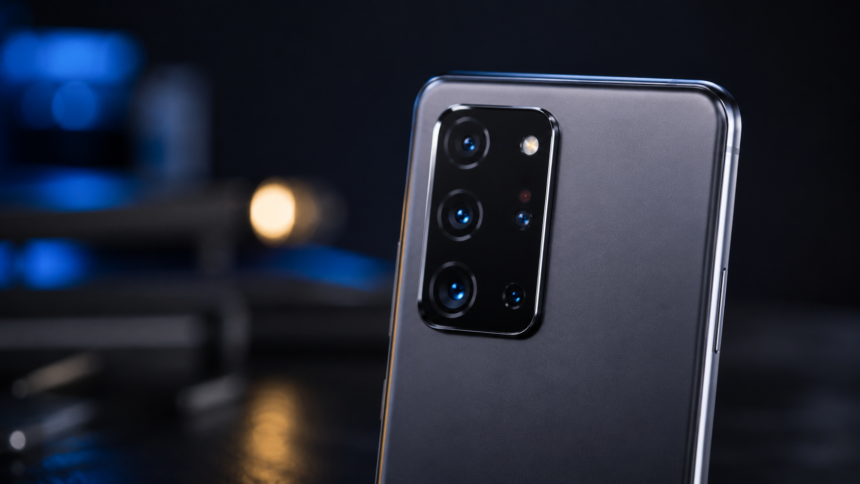
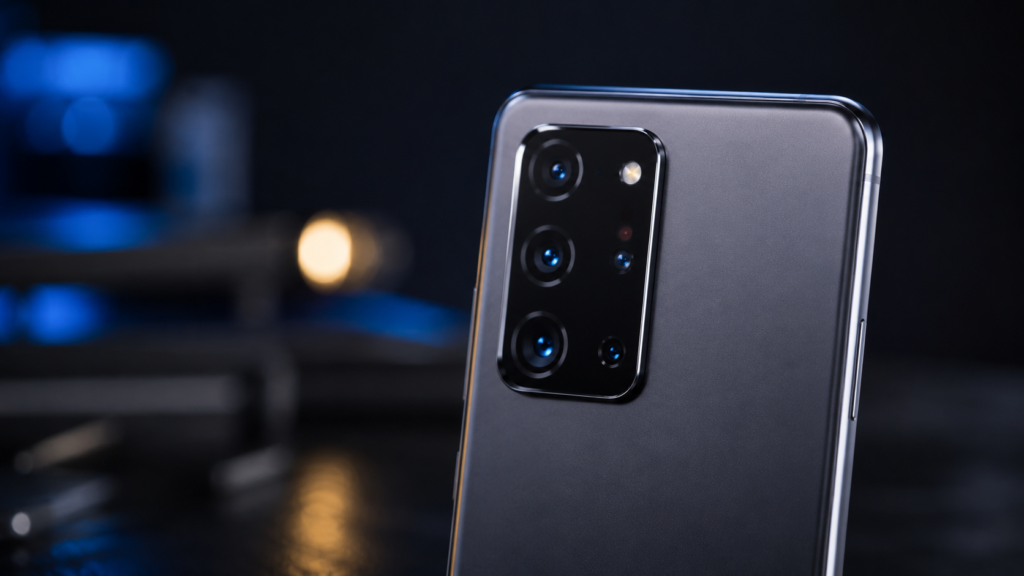
The Samsung Galaxy S20 camera setup split into two very different systems. The S20 and S20+ shared one. The Ultra ran something else entirely.
| Galaxy S20 / S20+ | Galaxy S20 Ultra | |
|---|---|---|
| Main | 12MP, f/1.8, OIS | 108MP, f/1.8, OIS |
| Telephoto | 64MP, 3x hybrid, OIS | 48MP periscope, 10x hybrid, OIS |
| Ultrawide | 12MP, 120° | 12MP, 120° |
| Depth | ToF (S20+ only) | ToF |
| Front | 10MP, f/2.2 | 40MP, f/2.2 |
| Max zoom | 30x | 100x |
| Video | 8K at 24fps | 8K at 24fps |
The gap between the two is bigger than the price difference suggested, and it’s the main reason people paid up for the Ultra.
The 108MP sensor, explained simply
A 108-megapixel number sounds like it should produce 108-megapixel photos. It doesn’t, and that’s deliberate. The Ultra’s sensor used nona-binning — combining nine adjacent pixels into one larger pixel. The result is a 12MP image, but each pixel gathers roughly nine times more light. In practice that means cleaner low-light shots and better dynamic range than the raw megapixel count would suggest. You could shoot at the full 108MP if you wanted. Files were enormous, low-light performance dropped sharply, and unless you were planning to crop heavily, there was little reason to bother. Most Ultra owners left it on the default. This is the part of the Samsung Galaxy S20 camera story that got misreported constantly. More megapixels didn’t mean more detail — it meant more flexibility in how the sensor used light.
Suggested Internal Links (5)
/galaxy-s20/→ our full Galaxy S20 coverage- S20 full specifications pillar → complete Galaxy S20 specifications
- S20 in 2026 owner’s guide → whether it’s still worth using
- Current Galaxy flagship review → today’s Galaxy camera
- Galaxy S series comparison → how Samsung cameras evolved
Zoom: where the marketing outran the hardware
The S20 and S20+ 3x zoom
Here’s something Samsung Galaxy S20 camera didn’t advertise clearly. The 64MP telephoto on the standard models wasn’t really a 3x telephoto lens. Its actual optical reach was barely longer than the main camera. What Samsung did was use the sensor’s high resolution to crop in, then call the result “3x hybrid optic zoom.” The output was decent — better than pure digital zoom — but it wasn’t a true optical 3x, and side-by-side with phones that had real telephoto lenses, the difference showed.
The Ultra’s periscope
The Ultra was the genuine article. Its 48MP periscope module folded the optical path sideways inside the phone body, delivering 10x hybrid optical zoom that was legitimately ahead of anything else on the market in 2020. At 10x, it was excellent. Usable, sharp, and something no rival could match.
About that 100x
Space Zoom was the headline feature and the weakest thing about the Samsung Galaxy S20 camera. At 100x, images came out soft, smeared by processing, and nearly impossible to frame — the slightest hand movement sent the viewfinder swinging. Samsung added a picture-in-picture guide to help, which told you everything about how hard it was to aim. It made for a striking demo. It rarely made for a usable photo. Most owners landed somewhere around 10x to 20x as the practical ceiling.
Video: 8K arrived early
The Samsung Galaxy S20 Camera was the first mainstream phone to shoot 8K video, at 24fps. It worked. It also produced files that ate storage at roughly 600MB per minute, ran hot on longer clips, and needed an 8K display to show any benefit — which almost nobody had. Cropping into 8K footage for a 4K edit was the one genuinely practical use.
More useful in daily shooting:
- Super Steady — aggressive stabilisation for handheld video, cropping in but delivering usably smooth footage
- 4K at 60fps across all lenses
- Pro Video mode, added in a later update, giving manual control over focus, ISO and audio input
8K was the spec-sheet win. Super Steady was the feature people actually used.
Single Take, the sleeper feature
Of everything Samsung introduced with the Galaxy S20 camera, this is the one that lasted. Press the shutter in Single Take mode and the phone fires every lens simultaneously for about ten seconds. It then hands you a folder of results — stills, short videos, a boomerang-style clip, a few filtered versions — and lets you pick. It sounds gimmicky. In practice it’s genuinely good for unpredictable moments: kids, pets, anything where you get one attempt and don’t have time to choose a mode. Samsung kept it in One UI for years afterwards, which is the clearest possible verdict on whether it worked.
Suggested External Sources
- Samsung Galaxy S20 official camera page:
https://www.samsung.com/global/galaxy/ - Samsung ISOCELL sensor information:
https://semiconductor.samsung.com/image-sensor/ - Samsung Newsroom Unpacked 2020:
https://news.samsung.com/global/
The autofocus problem
The Ultra shipped with a real flaw, and it’s worth recording honestly. Early units struggled to lock focus on close subjects, hunting back and forth before settling — or not settling at all. It was widespread enough that Samsung pushed multiple firmware updates through the first months of 2020 to address it. The fixes helped substantially, and later production units behaved better. But it left a mark on the Ultra’s reputation, and reviews published in the first weeks were noticeably harsher than those published later.
How the Samsung Galaxy S20 camera holds up now
For everyday photography in good light, still fine. A 12MP output from a well-tuned sensor doesn’t age badly, and the Ultra’s 10x zoom is still more reach than most mid-range phones offer today. Where it shows its age is in processing. Computational photography moved fast after 2020. Modern phones are dramatically better at night shots, HDR balance and portrait edge detection — not because the sensors improved that much, but because the software did. If you still own one, the Samsung Galaxy S20 camera will serve you well for daylight shots and reasonable zoom. It won’t match a current phone after dark.
Frequently Asked Questions
- How many cameras does the Galaxy S20 have? The S20 has three rear cameras and one front. The S20+ adds a ToF depth sensor for four rear. The Ultra also has four rear cameras plus a 40MP front camera.
- Is the Samsung Galaxy S20 camera still good? In daylight, yes. Low-light performance lags well behind current phones because computational photography has advanced considerably since 2020.
- What is 100x Space Zoom? A digital zoom mode on the S20 Ultra that pushes past the optical range using processing. Results at 100x are soft and hard to frame. Around 10x is where the Ultra genuinely excels.
- Does the Galaxy S20 shoot 8K video? Yes, at 24fps. Files are very large and heat builds on longer clips, so most people shot 4K instead.
- What is Single Take? A mode that fires all lenses for about ten seconds and returns a set of photos and clips to choose from. One of the more genuinely useful features Samsung introduced that year.
- Why is my Galaxy S20 camera blurry? On the Ultra, early autofocus issues were fixed by firmware updates, so check you’re on the latest available version. Otherwise, clear the Camera app cache in Settings and clean the lens — six years of pocket lint does add up.
- Which Galaxy S20 has the best camera? The Ultra, clearly. The 108MP sensor and 10x periscope zoom put it well ahead of the S20 and S20+, which share a more conventional setup.
Key Takeaways
- The Ultra ran a completely different Samsung Galaxy S20 Camera system from the S20 and S20+ — not just a better version.
- 108MP output 12MP images by default, combining nine pixels into one for better light gathering.
- The 3x zoom on the S20 and S20+ was a crop, not a true optical telephoto.
- The Ultra’s 10x periscope was genuinely class-leading in 2020.
- 100x Space Zoom was a demo feature, not a practical one.
- 8K video worked but was impractical — Super Steady proved far more useful.
- Single Take was the sleeper hit and survived in One UI for years.
- Early Ultra units had autofocus problems, resolved through firmware updates.
Conclusion
The Samsung Galaxy S20 camera was two stories in one launch. The standard models got a competent, unremarkable system with a zoom claim that didn’t quite survive scrutiny. The Ultra got hardware that genuinely pushed things forward, wrapped in a marketing number that didn’t. Strip away the 100x headline and what’s left is a periscope zoom that was years ahead, a sensor approach the whole industry later adopted, and one small software feature that outlived all of it. Not a bad legacy for a phone that spent its launch event talking about megapixels.