
Galaxy Watch 9 Leak Reveals Major Chipset Upgrade Before Unpacked
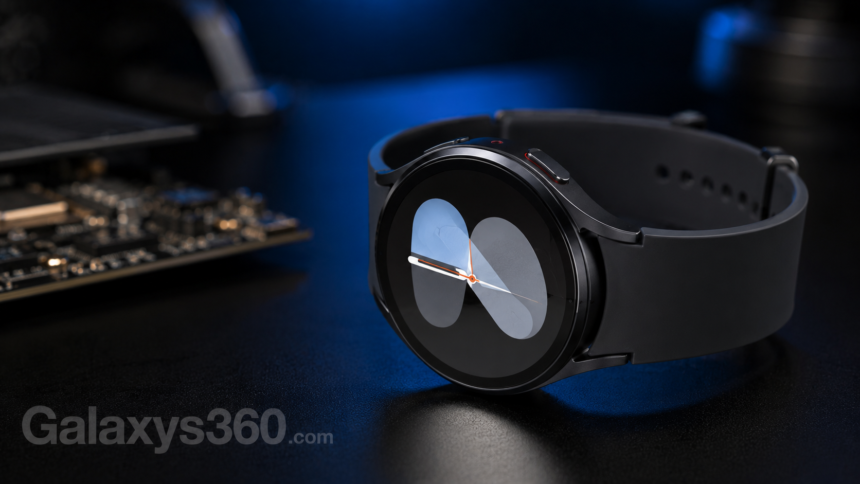
Samsung has used its own Exynos chips in every Galaxy Watch since the line began. That run appears to be over. Leaked promotional images published by Evan Blass — the veteran leaker better known as evleaks — show the standard Galaxy Watch 9 leak carrying a “Powered by Snapdragon Wear Elite” badge. Not the Ultra. The regular model. That detail matters more than it might sound. Most of the industry expected Samsung to hedge: Qualcomm silicon in the premium Ultra 2, Exynos retained in the mainstream watch. The leaked material suggests Samsung went all in. Unpacked lands on 22 July 2026 in London, so we’ll know for certain within hours. Here’s what the leaks point to, and why a chip swap is a bigger deal on a watch than on a phone.
- Galaxy Watch 9 Leak Reveals Major Chipset Upgrade Before Unpacked
- What the leak actually shows
- Why dropping Exynos is a genuine change
- The AI chip nobody’s talking about
- Everything else the leaks point to –
- Should you wait, or buy a Watch 8 now?
- Frequently Asked Questions (FAQ’s)
- When is the Galaxy Watch 9 Leak launching?
- Does the Galaxy Watch 9 Leak use a Snapdragon chip?
- Why is Samsung dropping Exynos?
- How much faster is the new chip?
- What is the NPU and does it matter?
- Will the Galaxy Watch 9 Leak have a bigger battery?
- What software does it run?
- Key Takeaways
- Conclusion
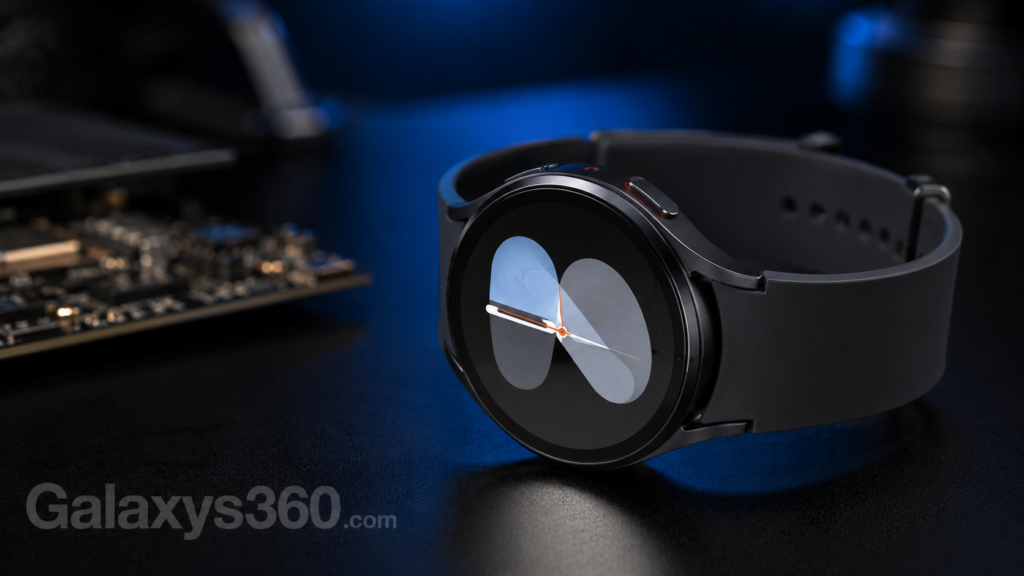
What the leak actually shows
Blass published the images through his Leakmail newsletter. They include what appears to be official Samsung marketing material — a “Powered by Snapdragon” slide alongside an exploded-view diagram of the watch internals. That’s stronger evidence than a spec sheet from an anonymous source. Marketing renders are produced late in the cycle, and they’re rarely wrong. One distinction worth keeping straight. Samsung’s own pre-launch teasers confirm a “brand-new processor”, improved battery life and new health features. Samsung has not said whose processor. The Snapdragon identification comes entirely from leaked material, not from Samsung. Qualcomm did announce the Snapdragon Wear Elite earlier this year and confirmed at the time that Samsung would adopt it for at least one upcoming device — it just didn’t say which.
Suggested Internal Links (5)
/galaxy-watch-9/→ everything we know about the Galaxy Watch 9- Galaxy Watch 8 review → last year’s Galaxy Watch
- Samsung Unpacked history → past Unpacked events
- One UI 9 coverage → One UI 9
- Best Galaxy Watch buying guide → which Galaxy Watch to buy
Why dropping Exynos is a genuine change
For years, sticking with Exynos actually served Samsung well. Qualcomm’s wearable chips went through a long stretch of being underwhelming, and Galaxy Watch 9 Leak Samsung’s in-house silicon comfortably outperformed them. That gap has closed, and by most accounts reversed.
The manufacturing difference
Both the outgoing Exynos W1000 and the new Snapdragon Wear Elite are built on 3nm processes. The difference is who makes them. The W1000 comes from Samsung’s own foundry. The Wear Elite is fabricated by TSMC, whose 3nm process is generally regarded as more efficient — better battery life, less heat, more consistent performance at the same power draw. On a smartwatch, where the battery is tiny and thermal headroom is almost nonexistent, that manufacturing gap matters far more than it would in a phone.
The performance claim
Leaked benchmark results reported by SamMobile put the Wear Elite roughly 50% ahead of the Exynos W1000 on Geekbench. Treat that number carefully. The results came from a pre-release test board, not shipping hardware, and pre-release silicon frequently behaves differently from what ends up on wrists. A meaningful jump looks likely. The precise figure doesn’t mean much yet.
The AI chip nobody’s talking about
The more interesting hardware change isn’t raw speed. It’s that the Snapdragon Wear Elite includes a dedicated NPU — a neural processing unit built specifically for on-device AI. This is reportedly Qualcomm’s first wearable chip with that hardware. In plain terms: right now, when your watch does anything clever — suggesting a reply, analysing a workout — it usually sends that work to your phone or to a server. A dedicated NPU lets the Galaxy Watch 9 leak handle those tasks itself.
What that changes in practice:
- Features work when your phone isn’t nearby
- Responses are faster, with no round trip to a server
- Health data can be processed without leaving the device
- Battery drain from AI tasks drops, since dedicated silicon is far more efficient than a general-purpose CPU doing the same job
Samsung’s teasers already mention a personal health coach and Gemini raise-to-talk, so the AI push is officially confirmed even if the hardware behind it isn’t.
Everything else the leaks point to –
| Galaxy Watch 9 Leaked | Galaxy Watch Ultra 2 | |
|---|---|---|
| Chip | Snapdragon Wear Elite | Snapdragon Wear Elite |
| RAM | 2GB | 2GB |
| Storage | 32GB or 64GB | 32GB or 64GB |
| Battery (40mm) | ~325–382mAh | — |
| Battery (44mm) | ~445mAh | — |
| Battery | — | ~800mAh (rumoured) |
| Build | Aluminium | Titanium |
| Bluetooth | 6.0 | 6.0 |
Storage and RAM figures come via WinFuture. Battery capacities are less certain — the 800mAh Ultra 2 figure in particular is a rumour, though if accurate it would be a substantial jump from the original Ultra’s 590mAh.
On software, firmware digging suggests the Galaxy Watch 9 Leak ships with One UI 9 Watch on Wear OS 7, alongside Samsung Health 7.0. One change worth flagging for existing owners: Samsung appears to be retiring Vascular Load, at least in the US, replacing it with a Blood Pressure Trend feature that checks at intervals rather than on demand. You’d still need to calibrate with a cuff first. On design, don’t expect much. The cushion-shaped case and circular display carry over. The titanium in Samsung’s teasers appears to apply to the Ultra 2 — leaks suggest the standard Galaxy Watch 9 Leak stays aluminium.
Should you wait, or buy a Watch 8 now?
If you’re shopping, wait the day out. Unpacked is tomorrow. Even setting aside the Galaxy Watch 9 Leak itself, a new launch usually pushes down the price of last year’s model — so waiting either gets you the new watch or a cheaper Watch 8. Whether it’s worth upgrading from a Watch 8 is a different question, and one nobody can answer honestly until reviewers have worn one for a fortnight. Chip efficiency claims are easy to make and hard to verify from a spec sheet. Battery life on a smartwatch depends as much on software tuning as on silicon.
Ask again in two weeks.
Suggested External Sources
- Samsung Newsroom Unpacked announcements:
https://news.samsung.com/global/ - Qualcomm Snapdragon Wear Elite platform page:
https://www.qualcomm.com/news - Samsung Galaxy Watch product page:
https://www.samsung.com/global/galaxy/watches/
Frequently Asked Questions (FAQ’s)
When is the Galaxy Watch 9 Leak launching?
Does the Galaxy Watch 9 Leak use a Snapdragon chip?
Why is Samsung dropping Exynos?
How much faster is the new chip?
What is the NPU and does it matter?
Will the Galaxy Watch 9 Leak have a bigger battery?
What software does it run?
Key Takeaways
- Leaked promo renders from Evan Blass show the Galaxy Watch 9 Leak badged “Powered by Snapdragon Wear Elite”.
- The standard model, not just the Ultra — most of the industry expected Samsung to split the lineup.
- TSMC manufacturing is arguably the bigger win, offering better efficiency than Samsung’s own 3nm node.
- Roughly 50% faster on leaked pre-release benchmarks, per SamMobile.
- A dedicated NPU — Qualcomm’s first in a wearable — enables on-device AI.
- Samsung has officially teased a new processor, longer battery and health features, without naming Qualcomm.
- Unpacked is 22 July 2026 in London.
Conclusion
Samsung switching chip suppliers on its own flagship watch isn’t a small decision. Exynos has been part of the Galaxy Watch identity since the beginning, and abandoning it for a competitor’s silicon — in the mainstream model, not just the halo product — says the performance argument was decisive. Whether it translates into a watch you actually notice is a separate question. Benchmark gaps rarely survive contact with real-world battery life, and Samsung’s software tuning will matter as much as Qualcomm’s engineering.